





Back

Logo Radici Group

We’ve always adopted a circular economy approach that aims to optimise the management of resources and production processes.

Circular economy

Less impact, more circularity

For Raditex, circular economy means designing, producing, and reusing in an integrated way, valuing materials from their origin and recovering post-industrial waste as a new resource. We believe in collaboration across the entire supply chain to build sustainable and circular solutions.


The Raditex circular model

The principles of Raditex circularity

An effective circular approach can optimise the use of resources and minimise waste. Raditex adopts various principles and strategies, such as eco-design and the enhancement of recycled materials.

icon

Eco-design

We work with our customers and suppliers to develop products that fully embrace the principles of the circular economy, taking advantage of the concept of monomateriality. Monomateriality, or the use of chemically compatible materials, is fundamental because it facilitates the recycling of products at the end of their lifespan, making the separation and treatment of the materials that much easier.

icon

Materials

We produce recyclable, durable, recycled materials from organic sources, and often made in plants powered by renewable energy.
Our commitment extends to the implementation of advanced technologies that minimise the environmental impact during production.

icon

Processes

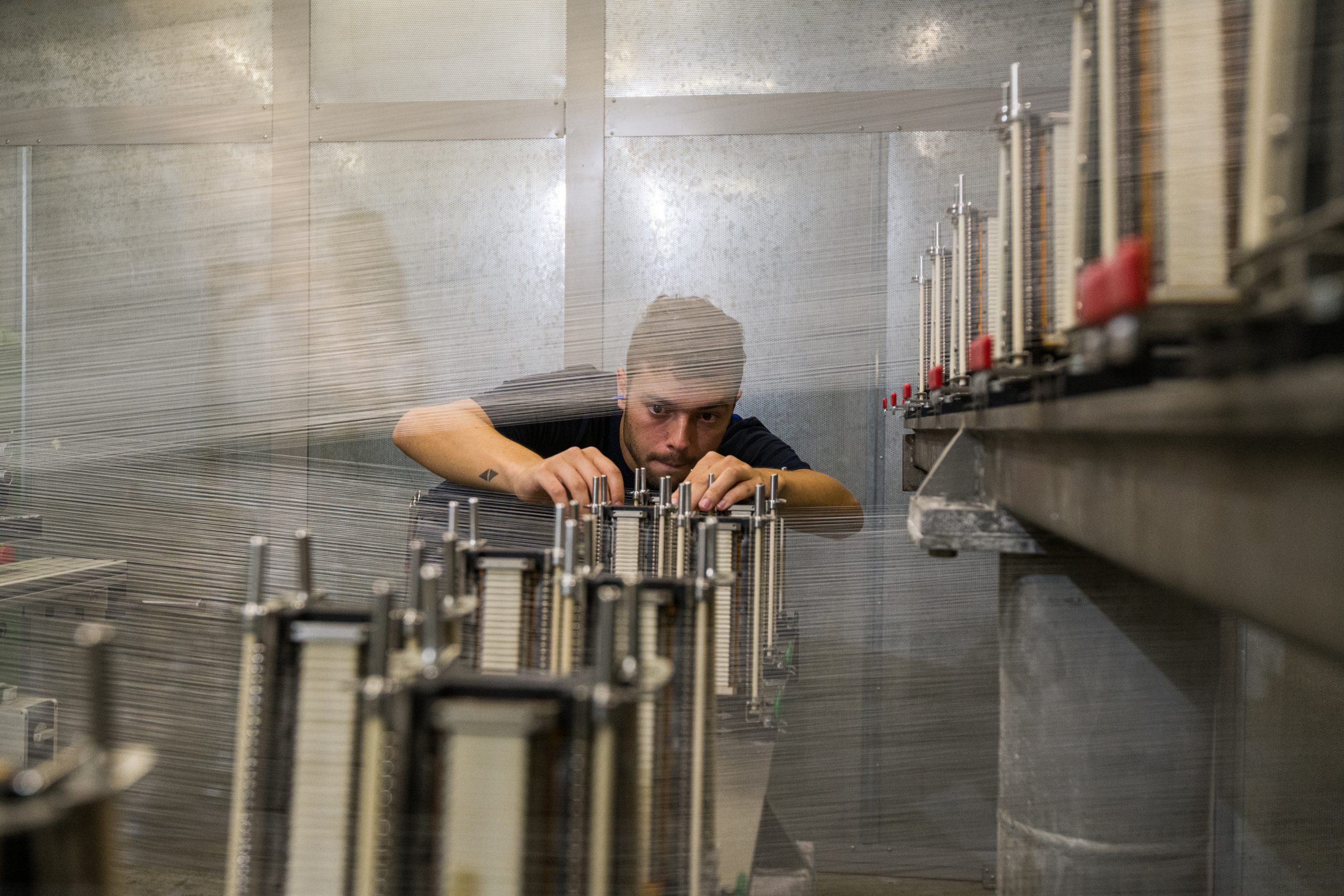
We optimise our production processes through the efficient use of raw materials and sustainable management of resources. We measure and track our operations to verify the effectiveness of our choices and ensure compliance with environmental parameters

icon

Durability and longevity

We design materials that guarantee long-lasting performance and are suitable even in the most demanding conditions. In particular, the use of nylon and polyester allows us to create solutions that maintain their characteristics over time, ensuring high quality for our customers.

icon

Recyclability

Thanks to mechanical recycling processes and supply chain collaborations, we use second-life  materials suitable for sectors that require high performance, such as technical textiles.

icon

Renewable resources

We are committed to using renewable resources, through bio-based materials and, in collaboration with Geogreen, by leveraging green energy sources.


Our core circular process

The recycling of nylon

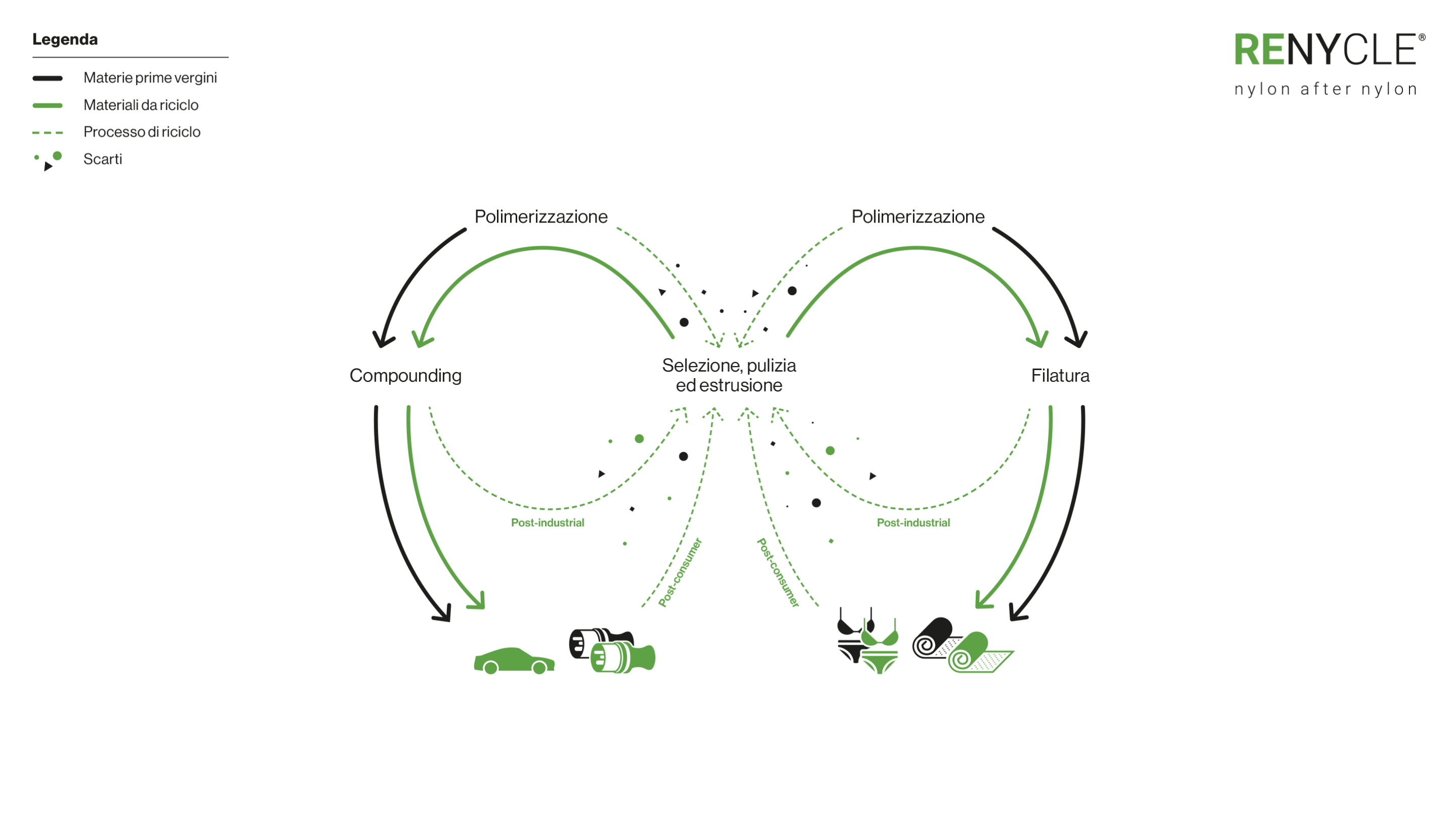
Thanks to Raditex’s know-how, nylon waste is transformed into new resources. This model embraces both pre-consumer and post-consumer recycling.


In particular, nylon’s lifecycle begins with polymerisation, where the material is created and later spun into fibre. Even though the polymerisation and spinning, waste is inevitably generated and can be reprocessed into raw material. 

Even post-consumer materials that have reached the end of their life, if carefully selected can also undergo a similar mechanical recycling process.


Raditex is able to convey the recyclable materials either back into the same industry of origin or into a different one, choosing the most appropriate solution according to the specific characteristics and the expected performance of the final applications.

Sustainable products

Solutions that make a difference

Raditex is committed to valorizing production waste, inevitably generated during polymerization and spinning, by transforming it into new raw material to be reused in its yarns.


Depending on the material’s characteristics and the required performance, the waste is reintegrated into the same supply chain or made available for use in other sectors, always with the goal of reducing waste and giving materials a new life.
Sustainability
Sustainable solutions

Explore the sustainable processes that help reduce environmental impact.

Sustainability
History of sustainability

Discover the milestones of our sustainability journey.